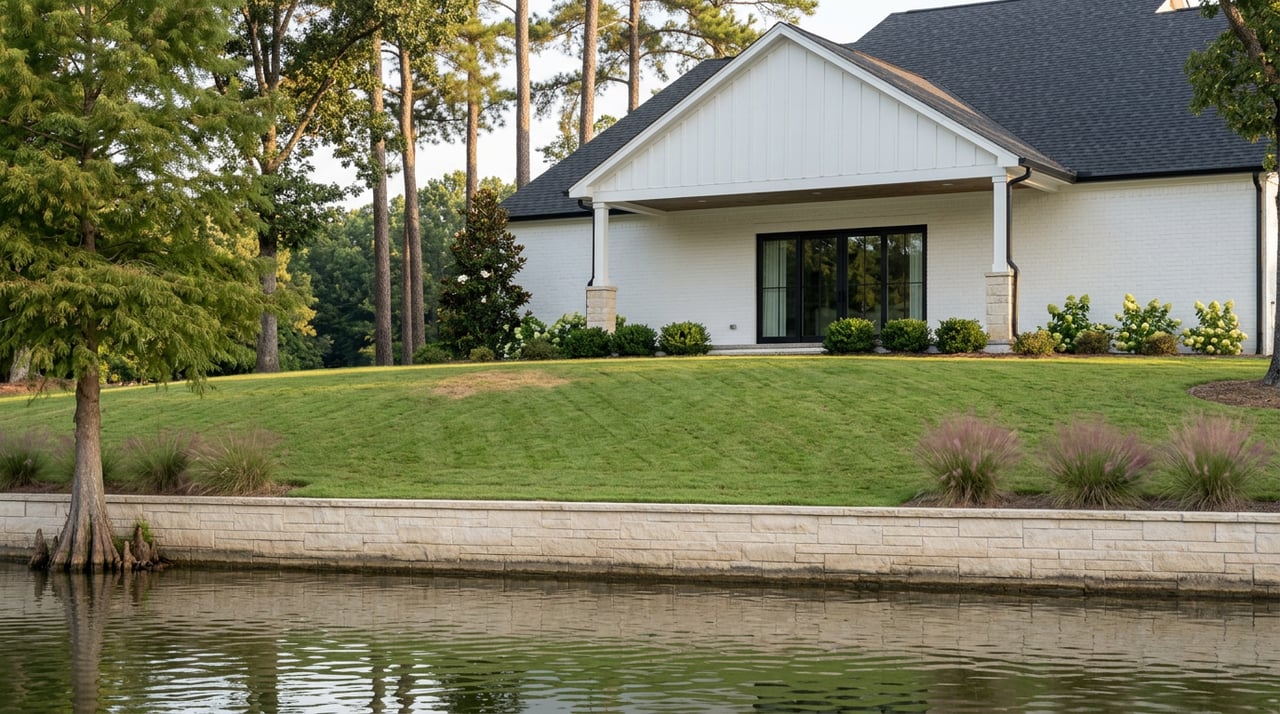
You find the listing, fall for the sunset views off Eastside Road, and start planning where the boat lift goes. Then title work comes back and the word "leasehold" shows up where you expected "fee simple." Your lender pauses. Your closing timeline gets longer. And the agent on the other side explains, sometimes for the first time in the whole transaction, that you're not buying the ground under this house. You're buying a long-term right to sit on it.
That moment happens on Lake Tyler more than almost anywhere else in East Texas, and it happens because the lake itself is split down the middle by two entirely different ownership structures. Most buyers treat Lake Tyler West and Lake Tyler East as interchangeable, differing only by which side of the canal has better fishing. They're not interchangeable. One side, you own the dirt. The other, the City of Tyler does, and that difference changes financing, appraisals, what you're allowed to build on the water, and what happens if you miss a deadline that's currently about a month away.
For buyers looking at Whitehouse, the small city that sits closest to the shoreline and functions as the easiest route in for most Lake Tyler residents, this distinction matters more than school ratings or drive time. It's the fine print behind the listing you're already circling.
Two Lakes, One City, Two Very Different Deals
Lake Tyler West was built in 1949. Lake Tyler East followed in 1966, connected to the West lake by a canal. Together they cover close to 4,500 acres and supply roughly 30 million gallons of drinking water to the city of Tyler every day. That last detail matters more than it sounds. This isn't a recreational lake the city happens to regulate. It's an active reservoir, which is why the City of Tyler owns and manages both lakes directly, with the Tyler City Council reviewing and approving every major decision about how the shoreline gets used.
On the West side, that ownership extends to individual lots. Residents lease their land from the city under long-term agreements. On the East side, waterfront lots are typically fee simple, meaning the homeowner owns the land outright, the same as anywhere else in Smith County.
That single distinction cascades into almost everything else about buying or selling on either side of the canal.
| Lake Tyler West | Lake Tyler East | |
|---|---|---|
| Land ownership | City of Tyler leasehold | Fee simple |
| Financing | Requires a lender comfortable with leasehold mortgages | Conventional financing paths |
| Comparable sales | Thinner pool, appraisal gaps more common | Broader comps, cleaner appraisals |
| Missed inspection consequence | Lease renewal can be withheld | Escalating fines, no lease at risk |
The Deadline That's Now Four Weeks Away
Every lot on both lakes, West and East, is required to complete an annual septic system inspection by a licensed Texas OSSF inspector and submit the report to the city. For 2026, that report is due October 1. Miss it, and the city can levy a $500 fine.
What's changed recently, and what most buyers don't hear about until they're already under contract, is how tightly this now connects to lease status on the West side. Since the city updated Chapter 19 of its code to cover boating, lake lot construction and leases, plumbing and sanitation, and lake management fees, annual septic inspection reports have to be submitted before a West-side lease renewal can even be processed. A separate but related requirement layers on top of that: boathouse and pier inspections have also been tied directly to lease renewal for West-side lots since the spring of 2025.
That's the part worth sitting with. On the East side, a missed inspection means a fine, an inconvenience, a check you write to make it go away. On the West side, a missed inspection means the city can decline to renew the lease itself. There's a 60-day cure period built in before that happens, and the first inspection is free if the property passes, but the mechanism is fundamentally different depending on which side of the canal you're standing on. If you're closing on a West-side property this September, confirming the current lease status and the seller's inspection history isn't paperwork. It's the difference between a normal closing and one where you're waiting on the city to sign off on a lease transfer at the same time you're trying to fund the loan.
What A Lease Actually Costs Over Time
The lease itself isn't a flat number, and when it was signed changes what a homeowner pays going forward. Leases signed before 2011 carry annual cost adjustments tied to the CPI-U index for the South Urban region, capped at 10 percent a year. Leases signed after 2011 are set to track city property taxes on comparable private property instead.
In practice, that means two neighbors on the same street can be paying under completely different formulas. A legacy pre-2011 lease has a ceiling on how fast it can climb in any single year. A post-2011 lease moves with the tax rate on similar land nearby, which means as Tyler's property values shift, so does the cost of holding that lease. Neither prohibits financing. The city code explicitly allows a lessee to encumber the leasehold with the city manager's consent. But a buyer comparing two West-side listings with similar price tags should ask which lease structure they're inheriting, because the long-term carrying cost isn't the same conversation.
What You Can Build Determines What You Can Buy
If part of the appeal is a boathouse with a lift or two, the lake's dimensional code puts a hard ceiling on what's possible before you ever pick up a hammer. Piers and boathouses are capped at 60 feet of width, and that width can't exceed 75 percent of the lot's actual waterfront frontage. A lot with 80 feet of frontage can build out to the full 60-foot cap. A lot with 70 feet of frontage tops out at 52.5 feet, no matter how much you'd like more.
That number rarely comes up during a showing. Buyers look at square footage, bedroom count, the view from the back deck. Frontage footage sounds like a marketing detail until you're trying to design a two-slip boathouse and discover the lot simply doesn't have the linear feet to support it. A few other rules worth knowing before you make an offer:
- Every pier and boathouse must display its lot number visibly from the water.
- Structures the city deems unsafe or a nuisance can be ordered repaired or removed at the owner's expense.
- These rules apply on both lakes, but they interact with lease renewal specifically on the West side.
The Financing Catch Almost No One Budgets For
Leasehold financing on Lake Tyler West is legal and common, but it comes with a rule that catches buyers off guard: lenders generally require the remaining lease term to outlast the mortgage term by five to ten years. A buyer chasing a standard 30-year mortgage needs the lease to have at least 35 to 40 years remaining, or a guaranteed renewal structure that a lender will accept in its place.
Then there's the appraisal problem. Leasehold properties on the West side simply don't sell as often or as uniformly as fee simple homes, which means appraisers have a thinner pool of comparable sales to work from. That gap is one of the more common reasons a West-side deal stalls between contract and closing. It's not a defect in the property. It's a function of how few truly comparable transactions exist to anchor the number a lender needs to see.
What This Actually Means If You're Buying Or Selling This Fall
The city isn't standing still on any of this. The Tyler City Council approved a new Lake Tyler Master Plan in February 2026, and Tyler Water Utilities held a public input meeting at The Boulders as part of that process. A separate push to fund improvements to the Hill Creek Park boat ramp wasn't selected in this year's grant cycle, and the city has said it plans to reapply in 2027. None of that changes the lease terms already in place, but it's a signal that the lake's infrastructure and oversight are actively being shaped right now, not left on autopilot.
For sellers, that means completing this year's septic inspection before listing removes one variable a buyer's lender will ask about anyway. For buyers, it means asking for the current lease document, the inspection history, and confirmation of renewal status before your option period runs out, not after. And for anyone financing a West-side purchase, working with a lender and title company who have actually closed a leasehold transaction here saves weeks you don't want to lose in October.
A Few Questions Worth Asking Before You Write An Offer
Does the October 1 deadline apply to Lake Tyler East too? Yes. The septic inspection requirement applies to both lakes equally. The enforcement just looks different, since there's no lease on the East side for the city to withhold.
Can I still get a 30-year mortgage on a West-side leasehold lot? Only if the remaining lease term clears that lender's buffer, typically 35 to 40 years. A lot with a shorter remaining term may mean a shorter loan term or a larger down payment to make the math work.
What if the seller hasn't completed this year's inspection yet? There's a cure period built into the code, but the smarter move is confirming inspection status during the option period rather than discovering a gap during underwriting. It's a quick ask that can save real time later.
Lake Tyler rewards people who do their homework before they fall in love with a view. If you're weighing a West-side lease against an East-side deed, or you just want someone who's walked this specific process before, The Tyler Lifestyle is a good place to start that conversation. Schedule a consultation and let's figure out which side of the canal actually fits what you're trying to build.