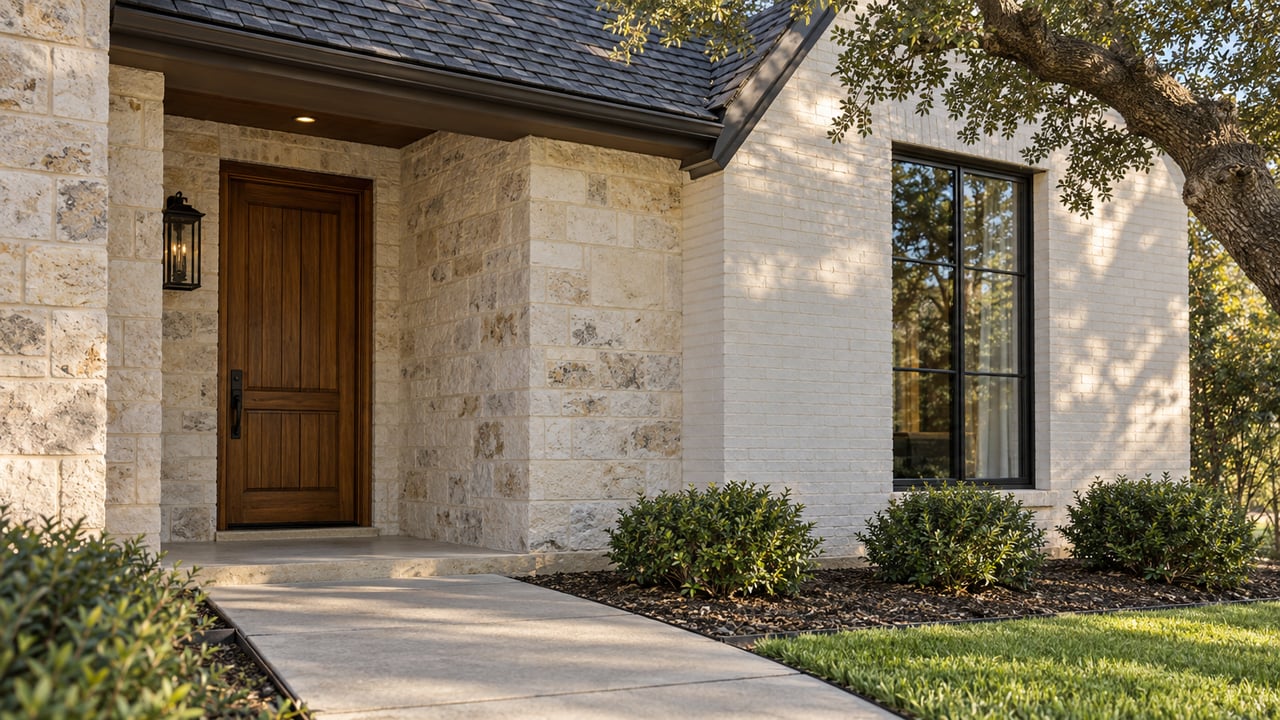
Ask a title company to run a Hollytree file and the first document that comes back rarely says "Hollytree" anywhere on it. It says Winsford at Hollytree, or Hollytree Place, or Hollytree Unit 6. The name buyers use to describe the neighborhood on Zoom calls with their lender is a marketing umbrella. The name that actually governs the lot, sets the dues, and decides whether a fence can go up is something narrower, and it changes block to block.
That gap matters in Hollytree, where golf course views, mature trees, and a country club are shared features. The neighborhood includes separately incorporated associations that share a name and a golf course, each with its own board, dues structure, and rules about what homeowners can do to their houses.
One Name, Several Boards
Public HOA filings in Texas show at least four distinct, active associations operating under or adjacent to the Hollytree name: Hollytree Place Homeowners Association, Hollytree Unit 6 Homeowners Association, Winsford at Hollytree Homeowners Association, and the Hollytree Country Club Men's Golf Association, which despite its name functions as its own HOA tied to golf-course-adjacent maintenance rather than the club membership itself. Hollytree Place was incorporated in Texas in 2011, which means it's a relatively young governing body layered onto a neighborhood that traces back to the early 1980s.
Each of these boards sets its own reserve fund policy, its own assessment schedule, and its own answer to the questions that actually matter during a transaction: what happens to shared amenities like a clubhouse roof or a pool deck when they need replacing, who signs off on an exterior renovation, and how disputes get resolved. A buyer who asks their agent "what's the HOA like in Hollytree" is asking a question that doesn't have one answer. It has at least four.
This isn't unique to Hollytree. Master-planned and country-club neighborhoods across Texas often layer several sub-associations under one recognizable name. For buyers, the practical step is to identify the association tied to a specific address before comparing dues or rules.
The Golf Course You Can See But Can't Assume You'll Play
The other assumption buyers carry into Hollytree is that a home on the course comes with a membership, the way a condo comes with a parking spot. It doesn't.
Hollytree Country Club, built in 1983 and designed by Bruce Devlin and Robert von Hagge, sits at the physical and social center of the neighborhood. Its own membership page states plainly that membership is not restricted to homeowners, but it does require sponsorship by an existing member, with the club's Membership Director and Membership Committee helping candidates fulfill that requirement. In practice, that means a buyer can close on a house that backs up to the eighth fairway and still not have playing rights the day they move in. Access runs through a person, not a deed.
The club itself has kept expanding. Its tennis facilities now include dedicated pickleball courts alongside the existing hard and clay courts, and the clubhouse runs a full calendar of golf and tennis tournaments, social events, and a full-service restaurant available to all membership classifications. None of that reaches a new owner automatically. It reaches them once an existing member vouches for them.
For a family weighing Hollytree specifically because of the golf-and-club lifestyle, that sponsorship requirement is worth surfacing before an offer goes in, not after closing. Asking a listing agent whether the current owner is a club member, and whether that owner is willing to sponsor the buyer, is a fair and normal question in this market. Skipping it means finding out the answer after the moving truck leaves.
What The Median Price Is Actually Averaging
As of August 2026, Hollytree's median list price sat around $699,000, with listings on the market ranging from roughly $480,000 to just over $1.5 million. That's not a tight cluster around a typical home. It's a span wide enough to include a 2,553-square-foot garden home in the gated Villas of Hollytree on one end and a 6,221-square-foot renovated estate on the course's eighth hole on the other.
Two different listing trackers pulled Hollytree's typical days-on-market for that same month and landed in different places, one closer to 50 days and another closer to 70. That spread isn't a data error so much as a symptom of the same underlying issue as the HOA patchwork: "Hollytree" isn't one product moving at one speed. Garden homes in Hollytree Square and the Villas of Hollytree tend to draw a different buyer, and move on a different timeline, than custom estates in Winsford or older course-fronting homes built when the neighborhood was new in the 1980s. Averaging them into a single median price and a single median days-on-market number flattens two distinct submarkets into one figure that doesn't describe either very well.
For a buyer comparing Hollytree to another South Tyler neighborhood on price alone, that median is a starting point, not a conclusion. The real comparison has to happen at the section level: which HOA governs the specific lot, what its dues actually cover, and whether the home's price reflects a garden-home product or a full custom estate.
What To Ask Before You Write The Offer
A few questions turn this from an abstract governance issue into something you can act on before you're under contract.
First, ask which specific homeowners association governs the address, not the neighborhood name on the flyer. Title companies can confirm this from recorded documents, and it should match one of the named associations rather than a generic "Hollytree HOA."
Second, request the current dues, the most recent reserve study or budget, and any pending special assessments from that specific association. Because these boards operate independently, one section's dues and reserve health can look very different from another's even a few streets away.
Third, ask directly whether club membership is included, transferable, or something you'll need to arrange sponsorship for after closing. If golf and tennis access is central to why you're looking at this neighborhood, this is not a detail to leave for after you own the house.
Fourth, if you're comparing a garden home to a full estate within Hollytree, ask your agent to pull comparable sales within the same sub-section rather than the neighborhood-wide median. A $699,000 median tells you almost nothing about what a specific 2,500-square-foot home in Hollytree Square should sell for.
A Few Questions Worth Settling Early
Does every home in Hollytree pay the same HOA dues? No. Dues are set independently by whichever association governs that specific section, and they vary based on that association's budget, reserves, and amenities.
If I buy a home on the golf course, do I automatically get to play it? Not automatically. The club's own membership terms require sponsorship by an existing member, regardless of whether the home sits on the fairway.
Is the median list price a reliable guide to what a specific home should cost? Only loosely. The August 2026 median of roughly $699,000 blends garden homes starting near $480,000 with estates well above $1 million, so a comparison within the same sub-section will tell you more than the neighborhood-wide figure.
Hollytree rewards buyers who treat the name as a starting point for research rather than a finished answer. The neighborhood's reputation is earned. Its governing paperwork takes a little more digging than the neighborhood name alone suggests.
If you're circling a home in Hollytree and want the specific HOA documents, dues history, and club membership status pulled before you write an offer, The Tyler Lifestyle can walk that file with you line by line. Schedule a Consultation before you fall for the name on the sign.
This article is general information, not legal, tax or financial advice. Consult a qualified professional about your situation.